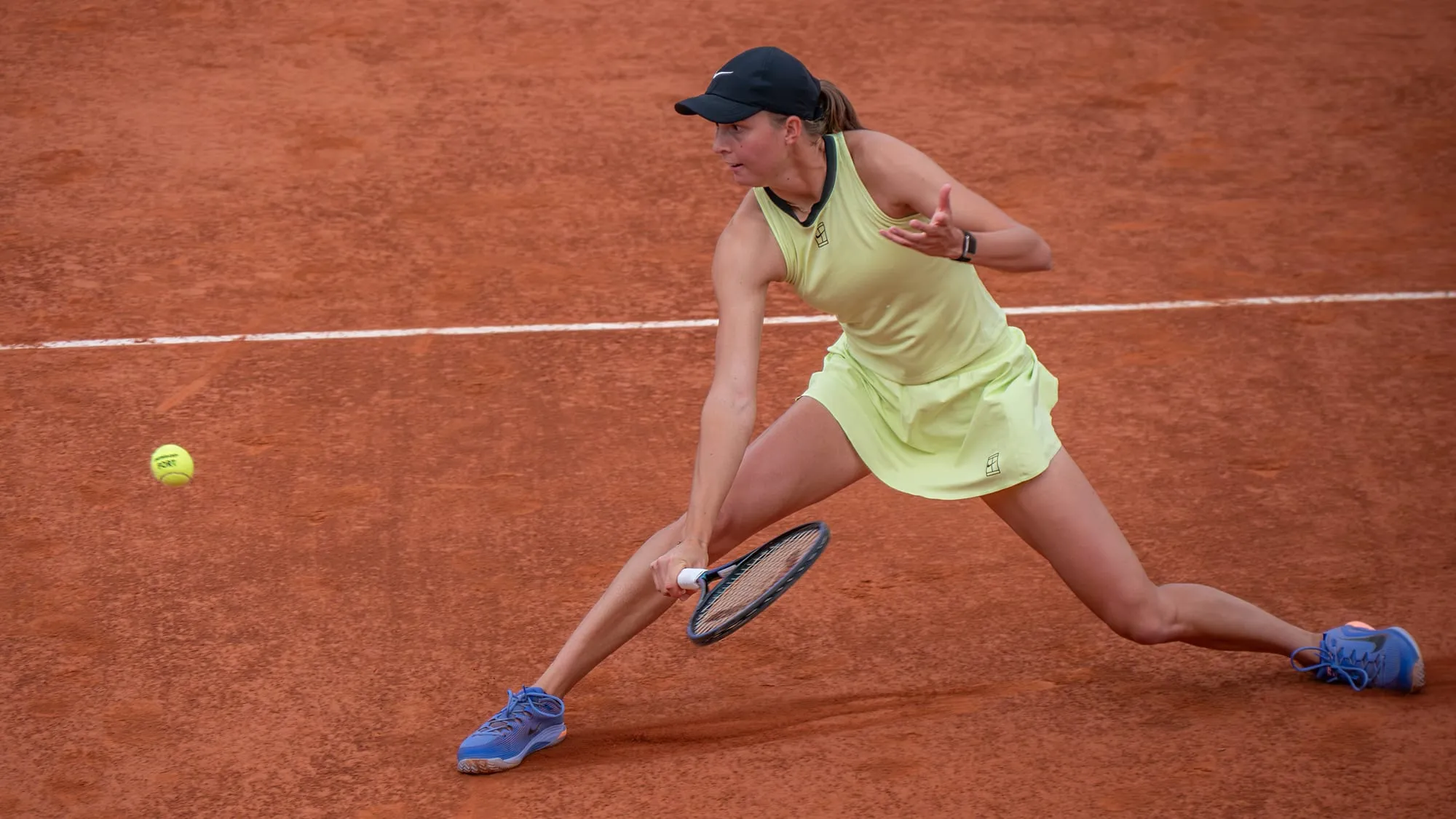
Lilli Tagger lost a WTA final on Sunday, and I’m still going to spend most of this post celebrating.
She’s eighteen. She hits a one-handed backhand on a tour where almost nobody does. And in Guangzhou she reached her third tour-level final in twelve months. Losing it in three sets, in thirty-degree heat, to a player having the week of her life, doesn’t undo any of that.
How she got there
Tagger came into the Guangzhou Open, a WTA 250 on hard courts, as the fourth seed and world No. 53. That number alone is a little absurd when you remember she was a junior eighteen months ago. She won the French Open girls’ title in 2025, beating Hannah Klugman 6-2, 6-0 in the final.
The quarter-final was a grind. She beat China’s Shi Han 6-4, 3-6, 7-5. The semi was the opposite. Kaitlin Quevedo, ranked 86, went out 6-2, 6-0 in 52 minutes. Tagger said afterwards that Quevedo may have had a problem with her leg, and wished her a quick recovery.
The final
Her opponent was Harriet Dart, a 30-year-old British qualifier ranked 115, chasing a first WTA title.
Tagger started like the favourite. She broke in the first game, was broken back at 4-4, then broke straight back to take the set 6-4 in 48 minutes. Then Dart found something. One break, for 5-3, decided the second set. The decider was chaos. Dart won twelve points in a row to go 2-0, Tagger got back to 2-2, Dart broke again, Tagger broke back for 3-3, and Dart broke once more. Serving at 3-5, Tagger saved two match points to hold. Dart served it out on her third: 4-6, 6-3, 6-4 in two hours and eighteen minutes.

This was Dart’s day as much as Tagger’s missed chance. At 30, she won her first WTA title after coming through qualifying, saving match points against Sun Xinran in the semis and then beating the fourth seed.
Tagger seemed to see it the same way. “Congratulations to Harriet, she completely deserved this title,” she said. “It just wasn’t meant to be, but we had an incredible week here and a great year.” She and Dart had met once before, in a W100 final in Fujairah earlier this year, which Tagger won in straight sets. “Now it’s 1-1,” she said. “I’m sure there will be a third and more.” Her quotes are translated from Austrian reports in German.
For an eighteen-year-old who has just lost a final in that heat, that’s a generous way to talk about it.
Three finals in a year
Her last twelve months look like this:
- Jiujiang, November 2025: her first WTA final, lost to Anna Blinkova.
- Prague, July 2026: her first WTA title, beating Daria Snigur 7-6, 6-2. That pushed her to a career high of No. 45.
- Guangzhou, November 2026: final number three, and her second in China.
Add a WTA 125 final in Mumbai in February and that’s four finals in a season and a bit, while still learning what a full tour calendar does to a body. She stays at No. 53 after this week. She was due to finish the year in Chennai, where she’d have been the second seed, but she withdrew on Monday, so her season is done.
Why I care so much
This site exists because of the one-handed backhand, so I’m biased. But Tagger matters to the shot in a way few players do.
The women’s tour has had great one-handers. Justine Henin. Francesca Schiavone, who now coaches Tagger. Since then, the backhand has been almost entirely a two-handed story at the top of the women’s game. Every coach has a sensible reason for teaching two hands. Most of them are right, most of the time.
Tagger wanted to switch to one hand at ten. Everyone told her not to, and it took two years, and winning a bet with her coach, before she was allowed. She kept it through the juniors, and at eighteen she’s reaching tour finals with it. It shows the shot can still work at that level.
When you watch the Guangzhou highlights, don’t just watch the winners. Watch how she sets up on the backhand side, and what she does when Dart pins her there. That’s where a one-hander gets tested on tour, and it’s where you’ll see how much of her game is built around it.
What’s next
Now comes an off-season that, for once, she gets to spend as a top-60 player, planning a first full year on the main tour rather than fighting her way onto it.
She’ll lose more finals, like everybody does. What matters more is that she keeps reaching them with a one-handed backhand.
Next time you’re on court, watch the highlights first, then spend ten minutes on nothing but your backhand set-up.